
Another interesting aspect of grammatical gender, as it was used in Old English, is the different ways nouns were grouped together. Sure, there is the obvious male-female distinction, but you can also see the animate-inanimate differences: “he” and “she” vs “it”. As it turns out, next to masculine and feminine nouns, one way of classifying nouns […]
Content/Sidebar/Sidebar

“(1) Grammatical Gender in Languages.”
In order to properly systematise a language, it’s important to group together words that have some aspects in common. That way, you simply need to learn a limited amount of grammar rules that apply to these classes, instead of learning every single word and how it behaves. And, in linguistics, gender is simply another way […]
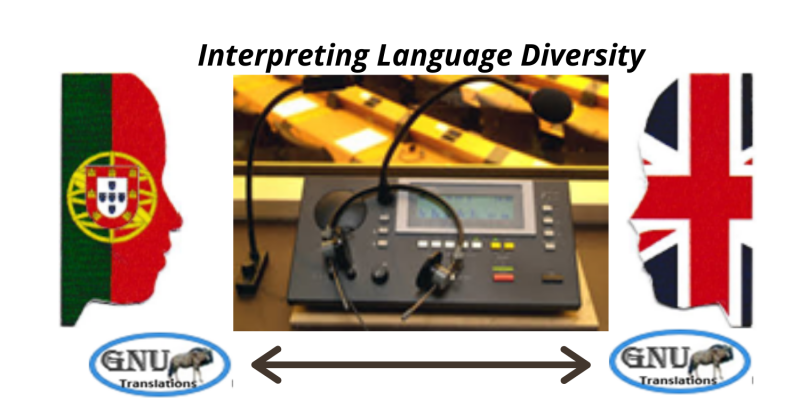
“(6) Five Things to Remember During Simultaneous Interpretation.”
Simultaneous interpretation is slightly misleading. There should always be a small pause between the speaker and interpreter to give the interpreter time to process and render the interpretation accurately. In the case of languages like Portuguese, Spanish or Japanese, it may be helpful to allow this extra time to account for word order differences. Although […]

“(5) Triggerers of interpreting difficulties as per Effort models.”
First includes those which increases processing capacity requirements either because they require more processing per unit time (for example dense or fast speeches and enumerations) or because their signal is noisy or distorted (for example heavily accented speeches, speeches with unusual grammar or logic, noisy physical environment and inadequate acoustic equipment). The second category includes […]

“(4) Differences between translation and interpreting.”
Translators deal with written language and have time to polish their work, while interpreters deal with oral language and have no time to polish their output. The implications are: (1) Translators need to be familiar with the rules of written language and be competent writers in the target language; interpreters need to master the features […]

“(3) Whispered interpreting (or chuchotage).”
It is a form of simultaneous interpreting in which the interpreter does not sit in a booth but in the conference room, next to the delegate who needs the interpreting, and whispers the target-language version of the speech in the delegate’s ears. None of these modes of interpreting is restricted to the conference setting. Simultaneous […]

“(2) In simultaneous interpreting.”
The interpreter sits in an interpreting booth, listens to the speaker through a headset and interprets into a microphone while listening. Delegates in the conference room listen to the target-language version through a headset. Theoretical issues: An important question is whether simultaneous interpreters actually translated simultaneously, that is whether they actually listened and spoke at […]

“(1) Working with interpreters in an interview.”
The interpreter is there to: (1) Facilitate communication, not conduct the interview. (2) Ensure the message gets across accurately and without being “filtered”. They are not there to give advice or opinion and are required to be objective and impartial. (3) Interpret what is said. The interpreter will interpret only what is said by the […]

“Types of meaning in words and uterances.”
Uterances are streches of written or spoken text. Lexical meaning of a word or lexical unit in a particular linguistic system, is the personality it acquires through usage within that system. Lexical examples: “Put an issue to bed”; “By the way”; “It’s raining cats and dogs”. Propositional meaning of a word or an uterance arises […]

Surprising facts about the Portuguese language, the sixth most spoken language in the world.
Portuguese was officially declared a language in 1290. Portuguese gradually evolved from Latin after it was introduced into Portugal around 200 BCE. It wasn’t until 1290, however, when King Don Diniz of Portugal declared it the language of Portugal, that it was recognized as an official language. Three new letters were added to its alphabet […]